
NVIDIA Earnings 2026: Record Revenue From AI
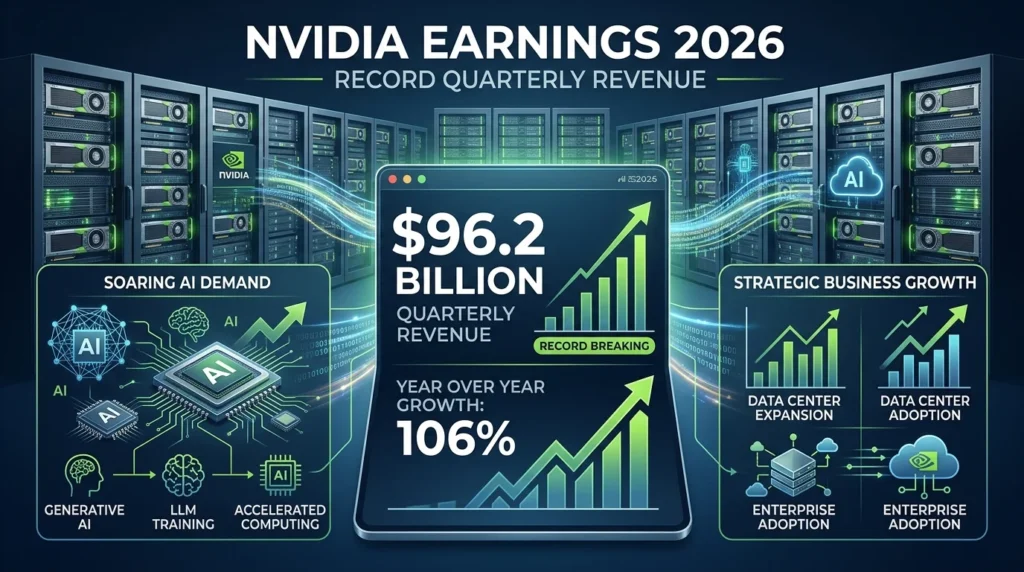
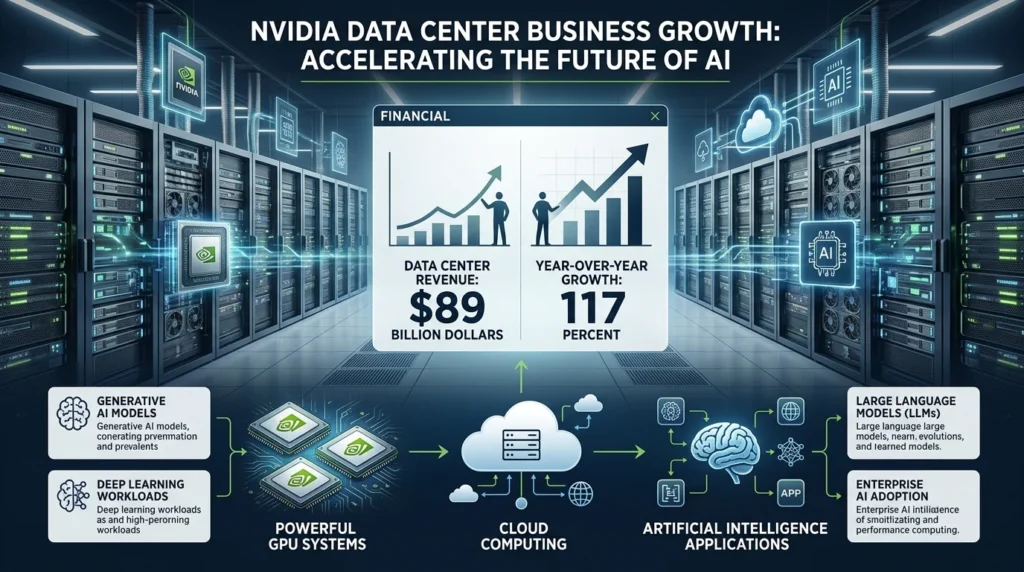
Nvidia is another company that has had a profitable quarter as the demand for artificial intelligence infrastructure continues to rise in the tech sector. The firm’s revenue for fiscal second quarter 2027 was $96.2 billion for the quarter ended July 26 2026. This represents a 106 percent increase compared to the same period last year and an 18 percent increase from the previous quarter. Nvidia’s latest results demonstrate how the demand for AI-related technology is transforming the tech industry. The latest results show that revenues from data centers were at $89 billion, representing a 117 percent rise over the same period last year.
NVIDIA Earnings 2026 Overview
The recent news about NVIDIA’s earnings has attracted quite a lot of attention to the company as it is one of the biggest players in the AI infrastructure market. In this regard, NVIDIA announced its latest quarterly revenue, reaching 96.2 billion dollars, while its adjusted earnings per share (EPS) reached 2.22 dollars. The graphics chipmaker also announced a gross margin of 75 percent for the last three months. Notably, its results beat the expectations of Wall Street, which shows that the market for AI computers remains compelling despite the fears that the current AI investing hype may be getting out of hand.
Reuters reports that NVIDIA also provided a robust outlook for the next fiscal quarter which has helped fuel expectations that AI infrastructure spending still has significant momentum.
NVIDIA Revenue Reaches 96.2 Billion Dollars
While the most important figure from the latest earnings report is NVIDIA’s 96.2 billion dollar quarterly revenue, this revenue more than doubled from the same quarter last year and thus underlines the rapidity of the company’s recent growth. The increase also reflects the fundamental change in the business resulting from the growing need for accelerated computing and AI systems.
NVIDIA has moved far beyond its traditional reputation as a graphics chip company.The company now supplies computing platforms and infrastructure used by major technology companies, AI developers, cloud providers and other organizations building large scale AI systems. This shift has made NVIDIA one of the most important companies in the current AI economy.
Data Center Business Leads NVIDIA Growth
The Data Center segment is NVIDIA’s growth engine, as the company posted a revenue of 89 billion dollars in Data Center in fiscal 2027 Q2, which is up by 117 percent year-over-year and by 18 percent quarter-over-quarter. The result was driven by increased demand for graphic processing units (GPUs) and other computer hardware for training and running artificial intelligence (AI) models. Big tech companies are investing billions of dollars in data centers to meet the rising need for modern AIs, which are extremely computationally intensive. Thus, it can be anticipated that the Data Center segment will be the primary force behind NVIDIA’s growth for some time to come.
Why AI Demand Is Driving NVIDIA Revenue
Artificial Intelligence has become one of the most promising technology fields in the world, and corporations are investing billions of dollars into computer infrastructure to create and implement AI models and utilize them in their services. NVIDIA’s chips are a crucial element in this infrastructure as it allows to perform the massive amounts of parallel operations required for modern AI applications. The company’s competitive position in the market is further reinforced by a diverse ecosystem around its GPU’s ranging from software networking systems to complete computer systems for AI development.
According to Reuters NVIDIAs latest outlook suggests that strong AI spending could continue for several years with the company projecting approximately 70 percent revenue growth for the fiscal year ending January 2028.
NVIDIA Forecasts 108 Billion Dollars in Revenue
NVIDIA expects another major increase in revenue during its next fiscal quarter. For Q3 fiscal 2027, the company forecasts revenue of approximately $108 billion, plus or minus 2 percent. This outlook is important because it suggests that demand is expected to remain strong rather than slow sharply after the latest record quarter. In addition, NVIDIA said its forecast does not assume any Data Center compute revenue from China. As a result, the forecast reflects the company’s expectations even without potential revenue from that market.
NVIDIA Vera Rubin Platform Enters the Next Stage
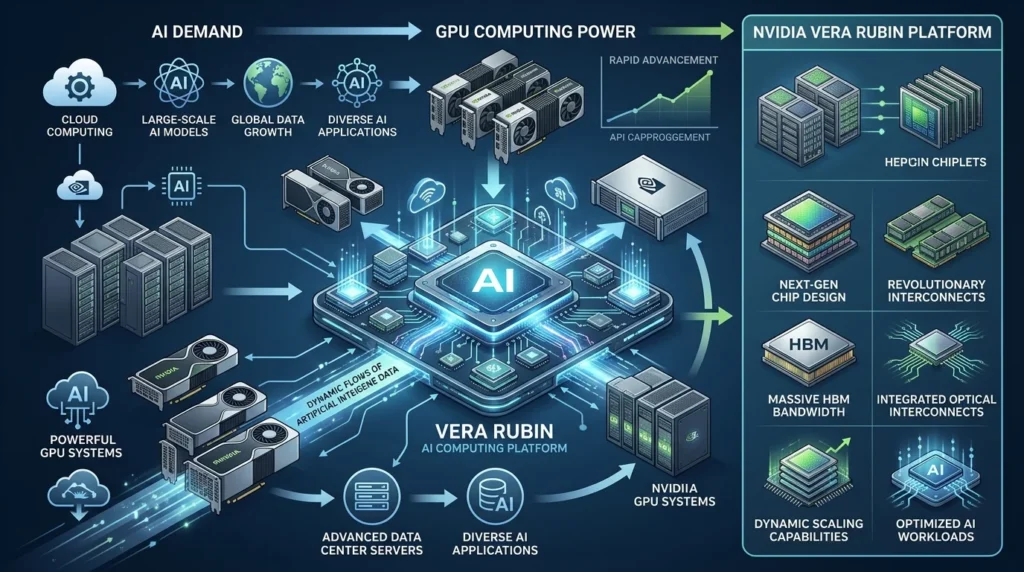
Another important development is the rollout of NVIDIAs next generation Vera Rubin platform.NVIDIA said Vera Rubin is ramping into full production with systems operating at several partners including CoreWeave Google Cloud Microsoft Azure Oracle Cloud Infrastructure and Nebius.The new platform could become an important part of NVIDIAs future growth as customers continue to look for more powerful and efficient AI computing systems.The success of new products will be closely watched because NVIDIA needs to maintain its technology leadership while the AI chip market becomes more competitive.
What NVIDIA Earnings Mean for the AI Industry
NVIDIAs earnings provide more than a look at one company. They also give investors and businesses an indication of how much money technology companies are continuing to spend on AI infrastructure. Strong Data Center revenue suggests that cloud companies AI labs and other large customers are still investing heavily in computing capacity. Reuters reported that NVIDIA is expanding its relationship with Amazon Web Services with plans involving large numbers of GPUs through 2028. This shows that the AI infrastructure market is becoming a long term business opportunity rather than simply a short term technology trend.
AI Business Growth Is Creating New Opportunities
The rapid expansion of AI infrastructure is creating opportunities for many parts of the technology industry. Cloud providers need more computing capacity. AI companies need powerful systems to train and operate their models. Data center operators need additional electricity cooling networking and hardware. Software companies are also developing products that depend on AI computing. NVIDIAs strong results therefore have implications beyond the semiconductor industry. The growth of AI infrastructure is creating a wider business ecosystem where hardware cloud services software and data center operations are becoming increasingly connected.
Challenges Facing NVIDIA
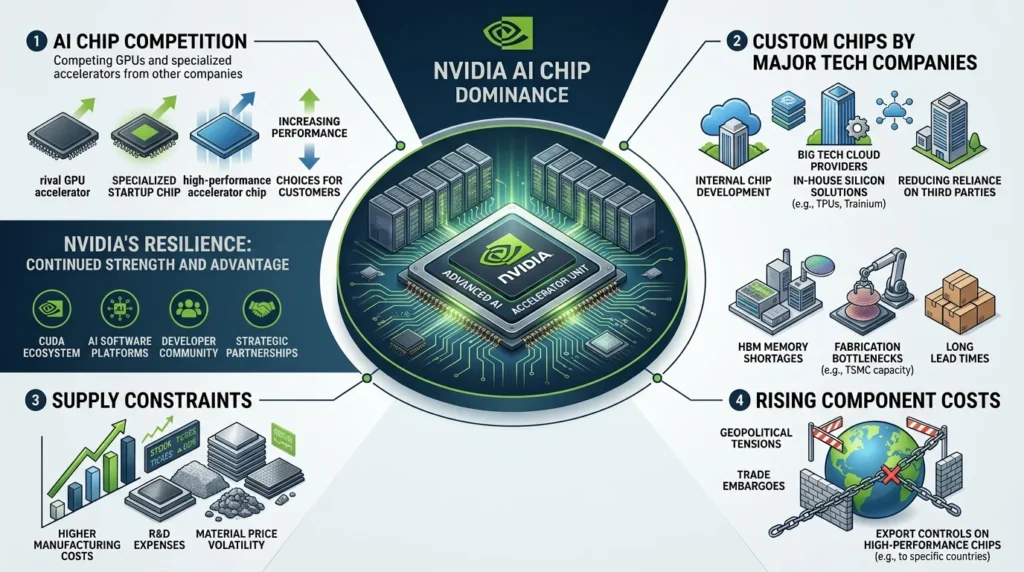
Despite the strong results NVIDIA still faces several challenges. One challenge is supply. Strong demand can create pressure on the company and its suppliers when customers want more computing hardware than manufacturers can deliver. Another challenge is rising component costs. Reuters reported that higher memory and component costs are expected to put pressure on NVIDIAs margins in future quarters. Competition is another important factor. Large technology companies are developing their own AI chips and alternative computing solutions which could eventually reduce their dependence on external hardware suppliers.
NVIDIA also faces uncertainty in China because changes in US export restrictions can affect its ability to sell certain advanced computing products in the market.
Competition in the AI Chip Market.
NVIDIA currently has a strong position in AI computing but competition continues to grow. Companies including AMD and major cloud providers are developing competing AI hardware. Large technology companies also have an incentive to design their own chips because custom hardware can help them control costs and optimize systems for their specific workloads.NVIDIA therefore needs to continue improving its hardware software and overall AI platform. Its ability to maintain a strong ecosystem could become just as important as the performance of individual chips.
What Investors Are Watching Next
Following the latest earnings report investors will likely focus on several areas. The first is whether NVIDIA can maintain its rapid Data Center growth. The second is whether the Vera Rubin platform can successfully scale across major customers. The third is whether supply constraints and higher component costs will affect profit margins. The fourth is how competition from custom AI chips develops. The fifth is whether AI companies and cloud providers can continue spending at the current pace. These factors will help determine whether the current AI investment cycle can maintain its momentum.
Why NVIDIA Matters to the Business World
NVIDIA has become an important indicator for the wider technology economy. When the company reports strong AI related demand it can provide evidence that businesses are still investing heavily in artificial intelligence. Its results can therefore influence expectations for semiconductor companies cloud providers data center businesses and other technology firms.
The latest earnings report is particularly significant because revenue has grown at an extraordinary rate while the company continues to forecast strong demand ahead.
NVIDIA Earnings 2026 and the Future of AI
The latest NVIDIA earnings report suggests that the AI infrastructure market remains in a major growth phase. Revenue of 96.2 billion dollars and Data Center revenue of 89 billion dollars demonstrate the scale of demand for AI computing. At the same time the company’s 108 billion dollar next quarter revenue forecast indicates that NVIDIA expects this demand to continue. However strong growth does not remove the risks.
Competition supply constraints component costs export restrictions and questions about long term AI spending will remain important issues for the company and the broader technology industry.
Final Thoughts
NVIDIA earnings 2026 have demonstrated once again the extraordinary business opportunities artificial intelligence is creating. The graphics card company reported record revenue for the quarter of 96,2 billion $, with NVIDIA Data Center reaching 89 billion $. NVIDIA’s outlook for the next quarter is also positive, which reflects well on the prospects for AI computing.
The more important message is that generative artificial intelligence is no longer an interesting sideline but is set to dominate the technology industry and beyond. It will drive demand for semiconductors, cloud services, software, data centers, and much more. NVIDIA is currently one of the clearest examples of this transformation. As the AI market continues to develop businesses and investors will be watching closely to see whether current spending levels can translate into sustainable long term growth.
FAQs
What were NVIDIAs earnings in 2026?
NVIDIA reported fiscal Q2 2027 revenue of 96.2 billion dollars which was 106 percent higher than the same quarter a year earlier.
How much did NVIDIAs Data Center revenue grow?
NVIDIAs Data Center revenue reached 89 billion dollars in fiscal Q2 2027 which was 117 percent higher than the previous year.
What revenue does NVIDIA expect next quarter
NVIDIA expects approximately 108 billion dollars in revenue for fiscal Q3 2027 with a plus or minus 2 percent range
Why is NVIDIA revenue growing so quickly?
Strong demand for AI computing infrastructure is the main driver of NVIDIAs recent revenue growth. Data Center revenue has become the company’s largest source of sales as businesses continue investing in AI systems.
What is driving NVIDIAs Data Center business?
Cloud providers, AI companies , data center operators and other organizations are investing in computing infrastructure for training and running AI models This demand is supporting NVIDIAs Data Center business.
What are the biggest risks for NVIDIA?
Major risks include competition from other AI chip companies, custom chips developed by large technology companies, supply constraints, higher component costs and uncertainty around international export restrictions.
What is the NVIDIA Vera Rubin platform?
Vera Rubin is NVIDIAs next generation computing platform designed for advanced AI workloads NVIDIA said the platform is ramping into full production with systems running at several major partners.